
Introduction
Online Attacks are one of the most serious challenges in today’s digital world. As more people use the internet for work, learning, shopping, and communication, cybercriminals are finding new ways to exploit online systems. From small personal devices to large business networks, no one is completely safe from Alerts Online Attacks if basic precautions are ignored. These attacks are not limited to experts or large companies. Even beginners who use email, social media, or online banking can become easy targets.
In simple words, Online Attacks are harmful activities performed through the internet to steal data, damage systems, or disrupt services. They can happen silently in the background or openly through fake messages and malicious links. Many people do not realize they are under attack until real damage has already happened. This is why understanding Online Attacks is extremely important for everyone, especially beginners and intermediate users.
Moreover, Online Attacks continue to evolve with technology. Hackers use smarter tools and social tricks to confuse users. A single careless click can expose personal data, passwords, or financial information. Therefore, learning how Online Attacks work, why they matter, and how to protect yourself is no longer optional. It is a basic digital survival skill.
This article explains Online Attacks in clear and simple English. It covers their importance, step-by-step protection methods, benefits of awareness, risks, common mistakes, expert tips, and frequently asked questions. By the end, you will have a strong foundation to stay safe online and make smarter digital decisions.
What is Online Attacks?
Online Attacks refer to harmful actions carried out over the internet to gain unauthorized access to systems, data, or networks. These attacks are usually performed by cybercriminals, hackers, or automated programs designed to exploit weaknesses in digital platforms.
In most cases, Online Attacks aim to steal sensitive information such as passwords, credit card numbers, personal files, or login credentials. Sometimes, attackers simply want to disrupt services, damage websites, or spread fear. For example, sending fake emails to trick users into sharing information is a common form of attack.
Online Attacks can target individuals, businesses, educational institutions, and even government systems. They can happen through emails, websites, mobile apps, social media platforms, or unsecured networks. Because the internet connects everything, a single weak point can open doors to serious security problems.
Understanding the meaning of Online Attacks is the first step toward prevention. When users know what they are dealing with, they are more likely to recognize warning signs and respond correctly.
Why is Online Attacks Important?

Online Attacks are important because they directly affect digital safety, privacy, and trust. As daily life becomes more digital, the impact of these attacks increases. A successful attack can cause financial loss, identity theft, emotional stress, and long-term damage to reputation.
For businesses, Online Attacks can shut down operations, leak customer data, and lead to legal issues. For individuals, the risks include hacked social media accounts, stolen money, and misuse of personal information. Even students and remote workers face risks when using unsecured devices or networks.
Another reason Online Attacks matter is their hidden nature. Many attacks remain unnoticed for weeks or months. During this time, attackers quietly collect data or monitor activities. This makes early awareness and prevention extremely valuable.
Finally, understanding Online Attacks helps build responsible digital habits. When users learn about threats, they become more careful with passwords, downloads, and online interactions. This awareness creates a safer internet environment for everyone.
Detailed Step-by-Step Guide
Step 1: Identify Common Types of Attacks
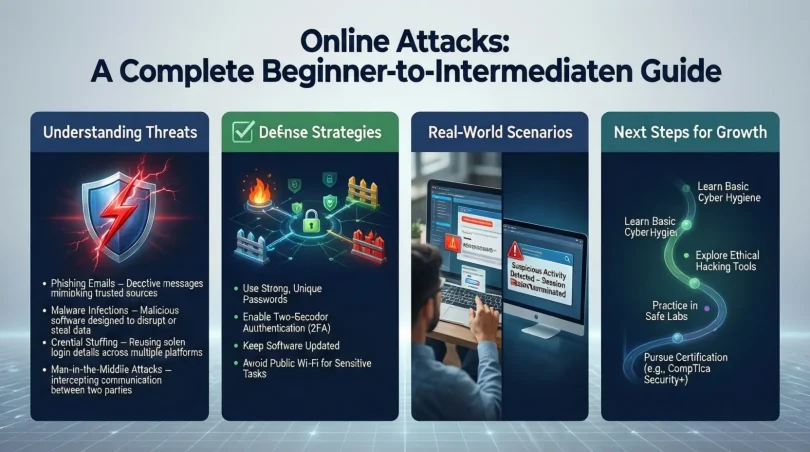
The first step is knowing the common forms of Online Attacks. These include phishing emails, malware downloads, password attacks, and fake websites. Each type uses different methods but shares the same goal of causing harm.
Step 2: Recognize Warning Signs
Unusual emails, unexpected login alerts, slow devices, and unknown pop-ups are common warning signs. Learning to notice these early can prevent serious damage.
Step 3: Secure Your Devices
Always use updated operating systems, strong passwords, and reliable security software. Device security is the foundation of protection against Online Attacks.
Step 4: Practice Safe Browsing
Avoid clicking unknown links or downloading files from untrusted sources. Safe browsing habits reduce exposure to harmful content.
Step 5: Protect Personal Information
Never share personal details openly online. Limit what you post on social media and check privacy settings regularly.
Step 6: Use Secure Networks
Public Wi-Fi networks are risky. Whenever possible, use trusted connections or add extra protection when accessing sensitive accounts.
Step 7: Stay Updated and Educated
Attack methods change frequently. Regular learning helps you stay ahead and adapt to new threats.
Benefits of Online Attacks Awareness
- Improves personal and professional digital safety
- Reduces risk of data theft and financial loss
- Builds confidence in using online services
- Encourages responsible internet behavior
- Helps protect others through shared knowledge
Disadvantages / Risks
- Constant threats can cause stress and fear
- Security tools may require time and effort
- Lack of awareness increases vulnerability
- Mistakes can still happen despite precautions
Common Mistakes to Avoid
Many users underestimate Online Attacks or believe they are not targets. This false confidence leads to careless behavior. Another common mistake is using weak or repeated passwords across multiple accounts.
Ignoring software updates is also dangerous, as updates often fix security flaws. Clicking on suspicious links without checking the source is another frequent error. Finally, trusting unknown online offers or messages can open doors to serious attacks.
Avoiding these mistakes greatly improves online safety and reduces the chances of becoming a victim.
FAQs
What are Online Attacks in simple terms?
Online Attacks are harmful actions done through the internet to steal information, damage systems, or disturb online services.
Can beginners be targeted by Online Attacks?
Yes, beginners are often targeted because attackers assume they have less security awareness.
Are Online Attacks only technical?
No, many attacks use psychological tricks to manipulate users rather than technical skills.
How often do Online Attacks occur?
They happen daily across the world, affecting millions of users and systems.
Can Online Attacks be completely avoided?
While no system is 100 percent safe, good practices greatly reduce risks.
Why should students learn about Online Attacks?
Students use digital platforms daily, making awareness essential for protecting data and privacy.
Expert Tips & Bonus Points
Experts recommend using unique passwords for each account and enabling extra security features where available. Regular backups protect data in case of damage. Staying informed about new threats is equally important.
Another useful tip is to slow down online. Attackers rely on urgency and fear. Taking a moment to think before clicking can prevent many problems. Teaching others about Online Attacks also strengthens community safety.
Conclusion
Online Attacks are a real and growing threat in the modern digital age. As technology becomes more connected, the opportunities for cybercriminals increase. However, awareness and education can significantly reduce risks. Understanding what Online Attacks are, why they matter, and how they work gives users the power to protect themselves.
This guide has explained Online Attacks in a simple and practical way. From identifying threats to applying step-by-step protection methods, every section aims to build strong digital habits. Beginners can start with basic precautions, while intermediate users can refine their security strategies.
Most importantly, online safety is not a one-time task. It requires continuous attention, learning, and responsibility. When users stay alert and informed, they create a safer environment for themselves and others. By taking Online Attacks seriously and acting wisely, anyone can enjoy the benefits of the internet without unnecessary fear.