
Introduction
In today’s digital world, personal data is everywhere. From signing up for social media accounts to making online purchases, almost every action you take leaves a digital footprint. Personal data includes your name, email, phone number, address, and even online behavior like search history or app usage. Businesses, governments, and hackers all value this data because it helps them understand you, provide services, or, in some cases, exploit vulnerabilities.
Understanding what personal data is, how to protect it, and how it is used has become essential. People often underestimate the importance of safeguarding their personal information. A small leak can lead to identity theft, financial loss, or even personal safety issues. At the same time, personal data can improve our online experiences, from personalized shopping recommendations to faster customer support.
This article will explain everything beginners and intermediate users need to know about personal data. We will discuss its definition, importance, benefits, risks, common mistakes, and actionable steps to protect it. By the end, you will have a clear understanding of personal data and how to manage it responsibly.
What is Personal Data?
Personal data refers to any information that can identify a person, either directly or indirectly. It can include obvious details such as:
- Full name
- Date of birth
- Email address
- Phone number
- Home address
It also includes less obvious information, like:
- IP addresses
- Cookies stored by websites
- Location data from mobile devices
- Online behavior and preferences
The term “personal data” is widely used in privacy laws, such as the GDPR (General Data Protection Regulation) in Europe, to ensure that people know how their information is collected, stored, and used. Essentially, if data can point back to you, it is considered personal.
It is also important to differentiate between personal data and sensitive personal data, which includes highly private information like:
- Financial records
- Health information
- Biometric data (fingerprints, facial recognition)
- Political opinions or religious beliefs
Understanding this distinction helps you prioritize what needs stronger protection.
Why is Personal Data Important?
Personal data is critical for several reasons:
- Identity Verification – Personal data helps verify who you are. Banks, online services, and government systems use it to confirm your identity.
- Personalized Services – Companies use personal data to provide tailored experiences, like product recommendations or targeted ads.
- Legal Compliance – Many organizations must collect personal data to comply with laws and regulations.
- Security Measures – Personal data helps secure accounts, detect fraud, and prevent unauthorized access.
- Economic Value – Businesses collect data to understand markets, improve services, and increase profits.
However, the more your data is shared, the higher the risk of misuse. This is why it is essential to know how to handle personal data responsibly.
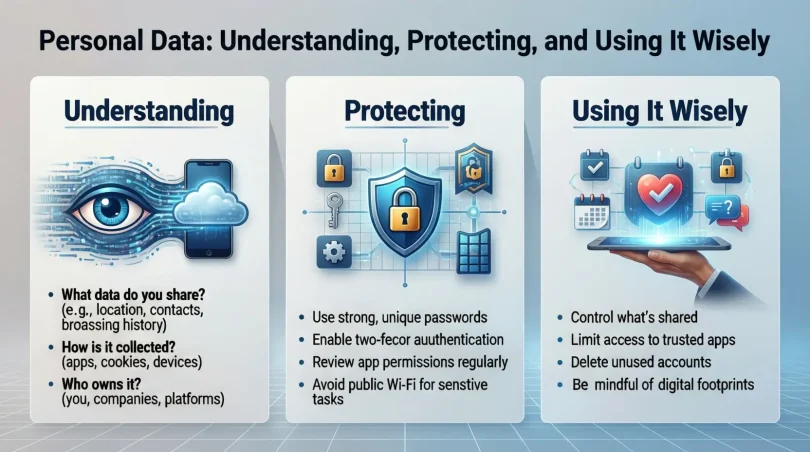
Detailed Step-by-Step Guide to Managing Personal Data

Step 1: Identify Your Personal Data
- Make a list of the information you share online and offline.
- Include details like social media profiles, email addresses, phone numbers, and financial accounts.
- Don’t forget less obvious data like IP addresses and location history.
Step 2: Understand Where It’s Stored
- Check which apps, websites, and services store your information.
- Review account settings on social media and online platforms to see data usage.
- Understand which third parties have access to your data through shared services.
Step 3: Control Data Sharing
- Limit sharing personal information to trusted websites.
- Adjust privacy settings on social media and online accounts.
- Avoid oversharing sensitive information in public forums or unencrypted channels.
Step 4: Secure Your Data
- Use strong, unique passwords for each account.
- Enable two-factor authentication whenever possible.
- Encrypt sensitive files on your devices.
- Regularly update software to prevent security vulnerabilities.
Step 5: Monitor Your Data
- Check bank statements, credit reports, and online account activity for unusual activity.
- Sign up for alerts from trusted security services to detect identity theft early.
Step 6: Safely Dispose of Data
- Delete old accounts that are no longer in use.
- Shred physical documents containing personal information.
- Securely erase digital files before selling or discarding devices.
Benefits of Personal Data
Managing personal data effectively has several advantages:
- Improved Online Experience – Personalized content, ads, and recommendations.
- Enhanced Security – Easier fraud detection and identity verification.
- Time-Saving – Pre-filled forms and faster transactions.
- Better Decision Making – Companies can provide better services using accurate data.
- Legal Protection – Being aware of your data helps you exercise rights under privacy laws.
Disadvantages / Risks
While personal data has benefits, it also carries risks:
- Identity Theft – Hackers can use stolen data to commit fraud.
- Privacy Invasion – Personal information may be used without consent.
- Financial Loss – Access to banking or payment information can lead to theft.
- Targeted Scams – Cybercriminals can craft personalized phishing attacks.
- Data Misuse by Companies – Improper use of personal data can violate your rights.
Common Mistakes to Avoid
- Using Weak Passwords – Easily guessed passwords put accounts at risk.
- Sharing Excessive Information – Oversharing on social media increases exposure.
- Ignoring Privacy Settings – Default settings often share more data than necessary.
- Clicking Suspicious Links – Can lead to malware and data theft.
- Not Updating Software – Outdated software may contain vulnerabilities.
- Reusing Accounts Across Platforms – Makes it easier for hackers to access multiple accounts.
FAQs About Personal Data
1. What is considered personal data?
Personal data includes any information that identifies you, such as your name, email, phone number, IP address, or location data.
2. How can I protect my personal data online?
Use strong passwords, enable two-factor authentication, limit sharing, and regularly monitor account activity.
3. What is sensitive personal data?
Sensitive personal data includes financial records, health information, biometric data, and religious or political beliefs.
4. Can companies use my personal data without my permission?
Legally, most companies must obtain consent, but some may misuse data. Always review privacy policies and opt-out if needed.
5. What happens if my personal data is stolen?
It can lead to identity theft, financial loss, and unauthorized account access. Report breaches immediately and monitor your accounts.
6. Should I delete old accounts?
Yes, deleting unused accounts reduces exposure and prevents hackers from exploiting dormant profiles.
7. Is personal data only stored online?
No, personal data can be stored offline in documents, files, and physical records. Protect both digital and physical copies.
8. How do privacy laws protect personal data?
Laws like GDPR and CCPA require companies to handle personal data responsibly and allow individuals to request access, corrections, or deletion.
Expert Tips & Bonus Points
- Regularly Audit Your Data – Check which platforms hold your personal information and update privacy settings.
- Use a Password Manager – Helps create unique and secure passwords for each account.
- Be Wary of Public Wi-Fi – Avoid entering personal information on unsecured networks.
- Educate Yourself – Stay informed about privacy threats, scams, and emerging technologies.
- Backup Important Data – Use encrypted backups to prevent loss due to hardware failure or cyberattacks.
- Use VPN Services – A reliable VPN can help protect your online activity from tracking.
Conclusion
Personal data is one of the most valuable assets in today’s digital age. It allows companies to provide better services, helps secure your accounts, and can enhance your online experience. However, mismanagement or misuse of personal data can lead to serious risks, including identity theft, financial loss, and privacy breaches.
By understanding what personal data is, why it matters, and how to protect it, individuals can take control of their digital presence. Implementing strong passwords, monitoring accounts, limiting sharing, and using privacy-focused tools are crucial steps to maintain safety.
In the end, protecting personal data is not just a technical necessity—it’s a smart habit. By making thoughtful choices about the information you share and understanding its potential consequences, you ensure that your personal data serves you safely, rather than putting you at risk. With proper awareness and consistent practices, managing personal data becomes simple, secure, and beneficial.