
Introduction
A security breach Hacking is one of the most serious challenges in the modern digital world. As businesses, schools, and individuals rely more on technology, the risk of data exposure continues to grow. In simple terms, a security breach happens when unauthorized people gain access to protected information. This can include personal data, financial records, login details, or confidential business files.
For beginners and intermediate readers, understanding this topic is essential. Many people believe only large companies face such problems, but that is not true. Small businesses, websites, and even personal accounts can be affected. One weak password or outdated system can open the door to serious trouble.
The impact of a security breach goes beyond money. It can damage trust, harm reputations, and cause long-term stress for those involved. Therefore, learning how breaches happen and how to prevent them is a smart step for everyone.
In this guide, you will learn what a security breach really means, why it is important, and how it occurs step by step. You will also discover benefits of strong security practices, common mistakes to avoid, and expert tips that are easy to follow. By the end, you will have a clear and practical understanding that you can apply in real life with confidence.
What is Security Breach?
A security breach occurs when protected data, systems, or networks are accessed without permission. This access can be intentional, such as hacking, or accidental, such as sending sensitive information to the wrong person. In both cases, the result is the same: data is exposed to people who should not see it.
There are many forms of breaches. Some involve stolen passwords, while others involve malware, phishing emails, or insider threats. For example, if an employee clicks a fake email link and enters login details, attackers can use that access to steal data.
A security breach can affect different types of information. This includes names, addresses, credit card numbers, health records, and business secrets. Once exposed, this data can be misused, sold, or publicly shared.
It is important to note that not all breaches are immediately visible. Some attackers stay hidden for months, quietly collecting information. This makes early detection very difficult.
Understanding what a breach is helps people take it seriously. It is not just a technical issue. It is a real-world problem that affects privacy, safety, and trust in digital systems.
Why is Security Breach Important?

Understanding the importance of a security breach helps people realize why prevention matters. When a breach happens, the damage can be fast and widespread. Even a small incident can turn into a major problem if not handled properly.
First, there is the financial impact. Businesses may face fines, legal costs, and loss of customers. Individuals may lose money due to fraud or identity theft. These costs often go far beyond initial expectations.
Second, trust is affected. Customers expect their data to be safe. When a company fails to protect it, people may never return. Rebuilding trust takes years and sometimes never fully happens.
Another important factor is legal responsibility. Many countries have strict data protection laws. Failing to protect user data can result in serious penalties. This makes security a legal requirement, not just a technical choice.
Finally, emotional stress is often ignored. Victims may feel unsafe, confused, and frustrated. Therefore, taking security seriously is not optional. It is essential for long-term safety and success in the digital age.
Detailed Step-by-Step Guide
Step 1: Identify Sensitive Data
The first step is knowing what data needs protection. This includes personal details, financial records, and confidential files. Without knowing what is valuable, protection efforts remain weak.
Step 2: Understand Possible Entry Points
Attackers often use weak passwords, outdated software, or unsecured networks. Identifying these entry points helps reduce risk early.
Step 3: Implement Strong Access Controls
Use strong passwords, two-factor authentication, and limited access rules. Only authorized people should access sensitive systems.
Step 4: Monitor Systems Regularly
Regular monitoring helps detect unusual activity. Early detection can reduce damage and stop attackers quickly.
Step 5: Educate Users and Staff
Human error is a common cause of a security breach. Training people to recognize threats like phishing emails is very effective.
Step 6: Prepare a Response Plan
Even with strong protection, incidents can happen. A clear response plan helps reduce confusion and limits damage.
Benefits of Security Breach Awareness
- Helps protect personal and business data from misuse
- Reduces financial losses caused by fraud and theft
- Builds trust with customers and users
- Supports legal and compliance requirements
- Improves overall system reliability
- Encourages responsible digital behavior
Disadvantages / Risks
- High cost of recovery after an incident
- Loss of customer confidence and reputation
- Legal penalties and compliance issues
- Emotional stress for victims
- Long-term business disruption
Common Mistakes to Avoid
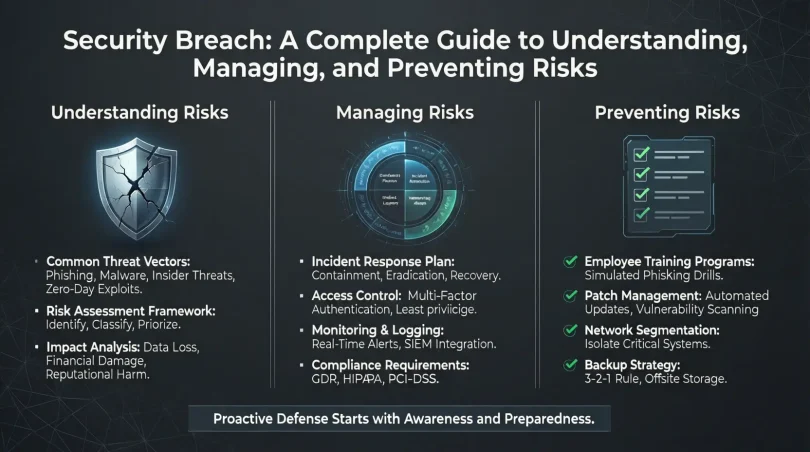
Many people make simple mistakes that increase risk. One common error is using weak or repeated passwords. This makes it easy for attackers to gain access. Another mistake is ignoring software updates. Updates often fix security flaws, and delaying them leaves systems exposed.
Some organizations also fail to train their staff. Without awareness, employees may click harmful links or share sensitive data unknowingly. Additionally, relying on a single security measure is risky. Security works best when multiple layers are used together.
Finally, ignoring warning signs is a serious issue. Strange system behavior or unusual login alerts should never be ignored. Addressing problems early can prevent major damage later.
FAQs
What is the most common cause of a security breach?
The most common cause is human error, such as weak passwords or falling for phishing scams.
Can small businesses face security breaches?
Yes, small businesses are often targeted because they usually have weaker security systems.
How long does it take to detect a breach?
Detection time varies. Some breaches are found quickly, while others remain hidden for months.
Is a security breach always caused by hackers?
No, breaches can also be accidental, such as sending data to the wrong person.
What should be done immediately after a breach?
Access should be secured, affected systems isolated, and an investigation started right away.
Can security breaches be completely prevented?
While full prevention is difficult, strong measures can greatly reduce risk.
Expert Tips & Bonus Points
Experts recommend focusing on prevention rather than reaction. Regular security audits help identify weak areas before attackers do. Using encryption adds another layer of protection for sensitive data.
It is also wise to back up data regularly. In case of an incident, backups allow faster recovery with minimal loss. Another helpful tip is to limit access rights. Not everyone needs access to all data.
Staying informed about new threats is equally important. Cyber risks evolve constantly, and keeping knowledge updated helps maintain strong protection. Simple habits, when practiced consistently, make a big difference.
Conclusion
A security breach is not just a technical issue. It is a serious event that can affect finances, trust, and emotional well-being. As technology continues to grow, so does the need for awareness and preparation.
By understanding how breaches happen and why they matter, individuals and organizations can take smarter steps to protect themselves. Simple actions like strong passwords, regular updates, and user education can reduce risk significantly.
No system is perfect, but being prepared makes a major difference. When people treat security as a shared responsibility, the digital world becomes safer for everyone. Learning, planning, and acting today can prevent serious problems tomorrow.