
Introduction
In today’s digital world, almost everything we do depends on online accounts. From social media and email to banking and online shopping, our personal data lives behind passwords. This is where Strong Passwords play a critical role. A weak password can open the door to hackers, while a strong one acts like a solid lock that protects your digital life.
Many people still use simple passwords because they are easy to remember. However, cybercriminals know this and take advantage of predictable patterns. As online threats continue to grow, understanding how passwords work and how to create secure ones has become a basic life skill. Even beginners can learn this with the right guidance.
This article is written in simple English to help both beginners and intermediate readers. You will learn what makes a password strong, why it matters, and how to create one step by step. We will also cover common mistakes, real examples, and expert tips that you can use immediately.
By the end of this guide, you will clearly understand how Strong Passwords protect your identity, money, and privacy. You do not need technical knowledge to follow this guide. You only need the willingness to improve your online safety starting today.
What is Strong Passwords?
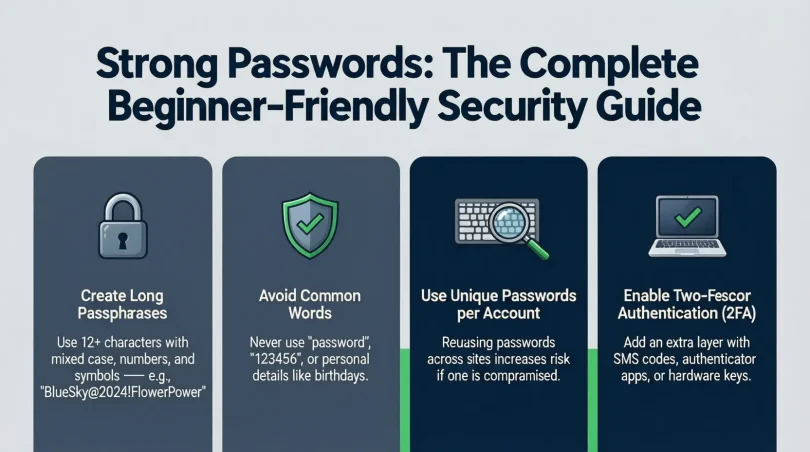
Strong Passwords are secure combinations of characters that protect your online accounts from unauthorized access. A strong password is designed to be difficult for humans and computers to guess. It usually includes a mix of letters, numbers, and special symbols.
Unlike weak passwords such as “123456” or “password,” strong passwords avoid obvious words and patterns. They are longer and more complex, which makes them harder to crack using automated tools. Hackers often use software that tries thousands of combinations per second, so complexity matters.
A strong password does not need to be confusing for you. With the right structure, it can be both secure and memorable. The goal is to create something unique that only you know and that cannot be easily guessed by others.
Why is Strong Passwords Important?
Passwords are the first line of defense for your digital accounts. If this line breaks, everything behind it becomes vulnerable. That is why Strong Passwords are so important in everyday online life.
Cyberattacks are increasing every year. Hackers target weak passwords because they are easy to break. Once they access one account, they often try the same password on other platforms. This can lead to identity theft, financial loss, and privacy breaches.
Strong passwords also protect your personal reputation. Social media hacks can damage trust, while email hacks can lead to scams sent in your name. In professional settings, weak passwords can expose sensitive company data.
Simply put, strong passwords reduce risk. They make attacks harder, slower, and less successful. This small effort can save you from serious trouble later.
Detailed Step-by-Step Guide
Step 1: Use Enough Length
Password length is the foundation of security. Longer passwords are harder to crack.
A good password should:
- Be at least 12 characters long
- Avoid short words or names
- Use full phrases instead of single words
For example, a short password like “Blue123” is weak. A longer version like “BlueSkyRiver92!” is much stronger.
Step 2: Mix Different Characters
Strong passwords use variety. Mixing characters makes guessing much harder.
Include:
- Uppercase letters
- Lowercase letters
- Numbers
- Special symbols like @, #, or !
Each added type increases complexity and security.
Step 3: Avoid Personal Information
Never use personal details in your passwords. Hackers often research their targets.
Avoid:
- Your name or nickname
- Birthdates
- Phone numbers
- Pet names
Personal information is easy to guess or find online.
Step 4: Use Passphrases
A passphrase is a group of unrelated words combined together. It is easy to remember and very secure.
Example:
- “CoffeeTrainMoon47!”
This method creates strong passwords without confusion.
Step 5: Make Every Password Unique
Using the same password everywhere is dangerous. If one account is hacked, all others become vulnerable.
Create a different password for:
- Banking
- Social media
- Work accounts
Uniqueness limits damage and improves overall security.
Step 6: Store Passwords Safely
Do not write passwords on paper or save them in plain text.
Better options include:
- Trusted password managers
- Secure offline storage
- Encrypted digital notes
Safe storage is part of smart password use.
Benefits of Strong Passwords
- Protects personal and financial information
- Reduces risk of hacking and identity theft
- Improves online privacy and control
- Prevents unauthorized access to accounts
- Builds better digital habits
- Supports long-term online safety
Disadvantages / Risks
- Can be hard to remember at first
- Requires time to create and manage
- May need secure storage solutions
- Forgotten passwords can cause lockouts
These risks are small compared to the protection gained.
Common Mistakes to Avoid
Many people try to be secure but make simple mistakes.
Common errors include:
- Reusing the same password everywhere
- Using simple patterns like “abc123”
- Changing only one character when updating
- Saving passwords in browsers without protection
- Ignoring security warnings
Avoiding these mistakes improves password strength instantly.
FAQs
What makes a password truly strong?
A strong password is long, complex, unique, and unpredictable. It uses different character types and avoids personal details.
How often should I change my passwords?
Change passwords every few months, especially for sensitive accounts like email or banking. Change immediately after any breach.
Are password managers safe to use?
Yes, reputable password managers are secure and encrypted. They help manage multiple strong passwords safely.
Can strong passwords stop all hacking?
Strong passwords reduce risk but do not guarantee total safety. Combined with good habits, they provide strong protection.
Is using symbols really necessary?
Symbols increase complexity and make passwords harder to crack. They add an extra layer of defense.
What should I do if my password is exposed?
Change it immediately. Update related accounts and review recent activity for suspicious behavior.
Expert Tips & Bonus Points
Experts recommend small habits that improve security over time.
Helpful tips include:
- Use different passwords for critical accounts
- Review saved passwords regularly
- Enable account alerts for login attempts
- Think in phrases, not words
- Stay updated on security practices
These habits strengthen your overall digital safety.
Conclusion
Online security starts with simple actions, and passwords are one of the most important. Strong Passwords protect your identity, money, and personal data from growing online threats. While creating secure passwords may seem difficult at first, it quickly becomes a habit with practice.
This guide showed you what strong passwords are, why they matter, and how to create them step by step. You also learned about benefits, risks, mistakes, and expert advice. Each section was designed to be easy to understand and practical to apply.
Remember, digital safety is not about perfection. It is about making smart choices consistently. Strong passwords are a small effort with a big impact. They slow down attackers and protect what matters most to you.
Start today by reviewing your current passwords and improving them where needed. With the right approach, you can enjoy the internet with more confidence and peace of mind.