
Introduction
Cyber Threats are one of the biggest challenges in today’s digital world. As more people use the internet for work, study, shopping, and communication, the risk of online attacks continues to grow. From small businesses to large organizations and even individual users, no one is completely safe from cyber dangers. This is why understanding Threats is no longer optional but necessary.
In simple terms, Cyber Threats are harmful activities that target computers, networks, and data. These threats aim to steal information, cause damage, or disrupt normal digital operations. Many beginners think cyber attacks only happen to big companies, but this is not true. Ordinary users are often easier targets because they lack basic security awareness.
Another reason Cyber Threats are increasing is the rapid growth of digital technology. Cloud computing, mobile apps, online banking, and social media have made life easier, but they have also opened new doors for attackers. Even a small mistake, such as clicking a fake link, can lead to serious problems.
This article is written in simple English to help beginners and intermediate readers understand Cyber Threats clearly. You will learn what they are, why they matter, their benefits and risks, common mistakes, and expert tips to stay protected. By the end, you will have practical knowledge that you can apply in real life to improve your digital safety.
What is Cyber Threats?
Cyber Threats refer to any potential or actual danger that can harm digital systems, data, or users through online activities. These threats are usually carried out by cyber criminals, hackers, or even careless insiders. Their main goal is to gain unauthorized access, steal sensitive information, or disrupt systems.
Cyber Threats can take many forms. Some are highly technical, while others rely on tricking users through social engineering. For example, malware is a common cyber threat that infects devices and causes damage. Phishing attacks, on the other hand, use fake emails or messages to steal personal details.
It is important to understand that Cyber Threats are not always visible. Many attacks happen silently in the background without the user noticing anything unusual. By the time the damage is discovered, important data may already be lost or misused.
In short, Cyber Threats are digital risks that can affect anyone connected to the internet. Awareness is the first step toward protection.
Why is Cyber Threats Important?
Understanding Cyber Threats is important because digital safety directly affects our personal and professional lives. Almost everything today depends on technology, including banking, healthcare, education, and communication. A single cyber attack can cause financial loss, privacy issues, and emotional stress.
For businesses, Cyber Threats can damage reputation and customer trust. A data breach may expose customer information, leading to legal trouble and loss of business. For individuals, identity theft and online fraud are common results of cyber attacks.
Another reason Cyber Threats are important is their evolving nature. Attackers constantly change their methods, making old security measures less effective. What worked last year may not be enough today. This means continuous learning and awareness are necessary.
Finally, Cyber Threats are important because prevention is usually cheaper and easier than recovery. Taking simple steps, such as using strong passwords and updating software, can reduce risks significantly. Knowledge empowers users to make safer digital choices.
Detailed Step-by-Step Guide
Step 1: Identify Common Cyber Threats
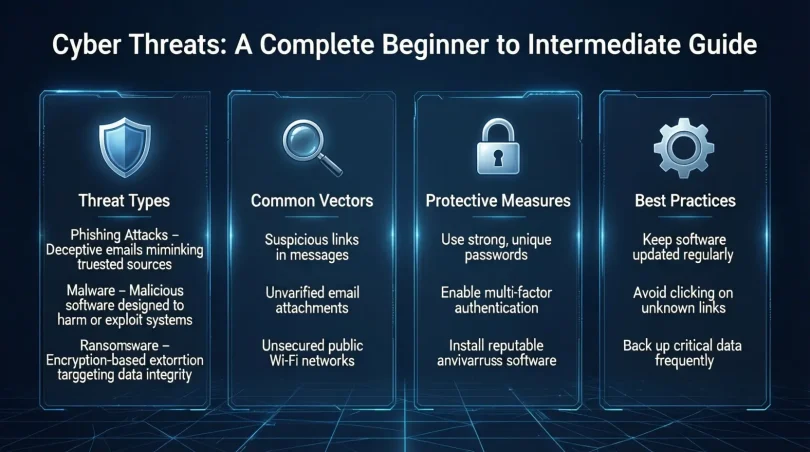
The first step is to know the common types of Cyber Threats. These include malware, phishing, ransomware, spyware, and denial of service attacks. Each type has a different method and impact.
Understanding these threats helps you recognize warning signs early. For example, unexpected pop-ups or slow system performance may indicate malware.
Step 2: Learn How Cyber Attacks Happen
Cyber attacks often exploit human mistakes. Clicking unknown links, downloading unsafe files, or using weak passwords are common entry points. Attackers also use fake websites and emails that look real.
By knowing how attacks happen, you become more cautious online. This reduces the chances of falling into traps.
Step 3: Secure Your Devices
Protecting devices is a critical step against Cyber Threats. Install trusted security software and keep it updated. Enable firewalls and use antivirus programs.
Also, update your operating system and apps regularly. Updates often fix security weaknesses that attackers target.
Step 4: Use Strong Authentication Methods
Weak passwords make it easy for attackers to access accounts. Always use strong and unique passwords for different platforms. A strong password includes letters, numbers, and symbols.
Whenever possible, enable two-factor authentication. This adds an extra layer of security by requiring a second verification step.
Step 5: Protect Personal and Sensitive Data
Be careful about what information you share online. Avoid posting sensitive details on public platforms. Use encryption tools when sending important data.
Backing up data regularly is also important. In case of a cyber attack, backups help recover lost information quickly.
Step 6: Stay Informed and Updated
Cyber Threats change constantly, so staying informed is essential. Follow reliable sources for cybersecurity news and updates.
Learning from real-world examples and incidents helps you understand current risks and how to avoid them effectively.
Benefits of Cyber Threats
- Increases awareness about online safety and security
- Encourages better digital habits and responsible internet use
- Helps businesses improve data protection strategies
- Supports the development of stronger security technologies
- Reduces financial and personal losses through prevention
- Builds trust in digital platforms and services
Disadvantages / Risks

- Can cause financial loss due to fraud or theft
- Leads to data breaches and privacy violations
- Damages personal and business reputation
- Results in system downtime and productivity loss
- Creates emotional stress and anxiety for victims
- Requires ongoing effort and resources for protection
Common Mistakes to Avoid
One common mistake is ignoring basic security practices. Many users believe they are not important enough to be targeted, which is a dangerous assumption. Cyber criminals often target easy victims.
Another mistake is using the same password everywhere. This makes it easier for attackers to access multiple accounts if one password is compromised.
Failing to update software is also a major error. Outdated systems have known weaknesses that attackers can exploit easily.
Lastly, trusting unknown emails or messages without verification leads to phishing attacks. Always verify the source before taking action.
FAQs
What are Cyber Threats in simple words?
Cyber Threats are online dangers that harm computers, networks, or data. They include viruses, scams, and hacking activities that aim to steal or damage information.
Who is most at risk from Cyber Threats?
Anyone using the internet can be at risk. However, users with weak security practices and outdated systems are more vulnerable to attacks.
Can Cyber Threats be completely avoided?
Cyber Threats cannot be completely avoided, but they can be reduced. Using proper security measures and staying informed lowers the risk significantly.
How do Cyber Threats affect businesses?
Cyber Threats can cause data loss, financial damage, and loss of customer trust. They may also result in legal issues and operational disruption.
Are mobile devices also affected by Cyber Threats?
Yes, mobile devices are common targets. Malicious apps, unsafe Wi-Fi networks, and phishing messages can affect smartphones and tablets.
What should I do if I become a victim of a cyber attack?
Disconnect the affected device, change passwords, and run security scans. If needed, report the incident to relevant authorities or support teams.
Expert Tips & Bonus Points
One expert tip is to think before you click. Most Cyber Threats rely on quick and careless actions. Taking a moment to verify links and sources can prevent many attacks.
Another useful tip is to separate work and personal accounts. This limits the damage if one account is compromised.
Regular training and awareness sessions are helpful, especially for businesses. Educated users are the strongest defense against Cyber Threats.
Using secure networks and avoiding public Wi-Fi for sensitive tasks is also recommended. If necessary, use a trusted virtual private network for added protection.
Conclusion
Cyber Threats are a serious and growing concern in the modern digital world. As technology becomes a bigger part of daily life, the risks associated with online activities also increase. Understanding these threats is the first step toward building a safer digital environment for yourself and others.
This guide has explained Cyber Threats in simple language, covering what they are, why they matter, and how to deal with them effectively. From identifying common threats to following step-by-step protection methods, each section is designed to build practical awareness. The benefits of understanding Cyber Threats include better security habits, reduced losses, and increased confidence in using digital platforms.
While risks and challenges remain, they can be managed with the right approach. Avoiding common mistakes, following expert tips, and staying informed make a big difference. Cyber safety is not a one-time task but an ongoing process that requires attention and responsibility.
In conclusion, Cyber Threats should not create fear but encourage smarter and safer online behavior. With knowledge, caution, and the right tools, anyone can reduce risks and enjoy the benefits of the digital world with confidence.