
Introduction
User Privacy has become one of the most important topics in today’s digital world. Every day, people share personal information while using websites, mobile apps, social media platforms, and online services. This information may include names, email addresses, phone numbers, locations, photos, and even payment details. Many users do not realize how often their data is collected, stored, and sometimes shared with third parties. Because of this, understanding privacy is no longer optional. It is essential for anyone who uses the internet.
In simple terms, privacy means having control over your personal information. It is about knowing what data is collected, why it is collected, and how it is used. When privacy is protected, users feel safer and more confident online. On the other hand, poor privacy practices can lead to data misuse, identity theft, and loss of trust. This affects not only individuals but also businesses and organizations.
Today, governments are introducing strict laws, and users are becoming more aware of their rights. Companies that respect privacy often gain long-term trust and loyalty. Beginners and intermediate users should learn the basics so they can protect themselves and make better choices online. This guide explains everything in simple language, step by step, with clear examples. By the end, you will have a strong understanding of how privacy works and how to avoid common risks in daily digital life.
What is User Privacy?
User Privacy refers to the right of individuals to control how their personal data is collected, used, stored, and shared. It focuses on protecting sensitive information from unauthorized access and misuse. In the digital space, privacy applies to websites, mobile apps, online services, and even smart devices.
Whenever a user signs up for an account, fills out a form, or browses a website, some data is collected. This may include basic details like name and email, or technical data like IP address and device type. Privacy ensures that this data is handled responsibly and transparently. Users should know what information is collected and how long it is stored.
Privacy is not about hiding everything. Instead, it is about choice and consent. For example, a shopping website needs an address to deliver a product. However, it should not share that address without permission. Clear privacy policies help users understand these practices.
In modern digital systems, privacy also includes data security, encryption, and access control. These measures protect data from hackers and leaks. When organizations follow proper privacy standards, users feel respected and valued. As digital activities continue to grow, privacy remains a key part of a safe and trusted online environment.
Why is User Privacy Important?
Privacy is important because personal data has real value. When it falls into the wrong hands, it can be misused in harmful ways. Identity theft, financial fraud, and online harassment are common results of weak privacy protection. Therefore, protecting user information helps prevent serious personal and financial damage.
Trust is another major reason privacy matters. Users are more likely to use platforms that respect their data. When companies clearly explain their data practices, users feel confident. This trust leads to long-term relationships and positive brand reputation.
Privacy also supports freedom and dignity. People should feel free to express themselves online without fear of constant tracking or misuse of information. Strong privacy practices protect this freedom and reduce unnecessary surveillance.
From a legal perspective, many countries now enforce data protection laws. Businesses that ignore privacy may face heavy fines and legal trouble. Following proper privacy standards is not only ethical but also necessary for compliance.
Finally, privacy encourages better digital habits. When users understand their rights, they make smarter choices. This creates a safer online ecosystem for everyone, including beginners who are just starting their digital journey.
Detailed Step-by-Step Guide
Step 1: Understand What Data You Share
The first step is awareness. Know what information you share online and where you share it. Read sign-up forms carefully and avoid providing unnecessary details.
Step 2: Read Privacy Policies Simply
Privacy policies explain how data is used. Focus on key points such as data sharing, storage duration, and user rights. This helps you make informed decisions.
Step 3: Use Strong Account Settings
Enable privacy settings on apps and platforms. Adjust visibility options, limit data sharing, and turn off unnecessary tracking features whenever possible.
Step 4: Protect Your Devices
Use passwords, screen locks, and updated software. These simple actions protect data from unauthorized access and cyber threats.
Step 5: Be Careful with Permissions
Many apps request access to contacts, location, or camera. Grant only what is necessary for the app to function properly.
Step 6: Stay Informed About Rights
Learn about basic data protection rights such as access, correction, and deletion. Knowing your rights helps you take action when needed.
Benefits of User Privacy

- Builds trust between users and platforms
- Reduces risk of identity theft and fraud
- Protects personal and financial information
- Encourages safe and confident online activity
- Supports legal compliance and ethical standards
- Improves overall digital experience
Disadvantages / Risks
- Requires time to understand settings and policies
- Can limit personalized content when data sharing is reduced
- Poor implementation may confuse users
- False sense of security if measures are not updated
- Over-reliance on platforms for protection
Common Mistakes to Avoid
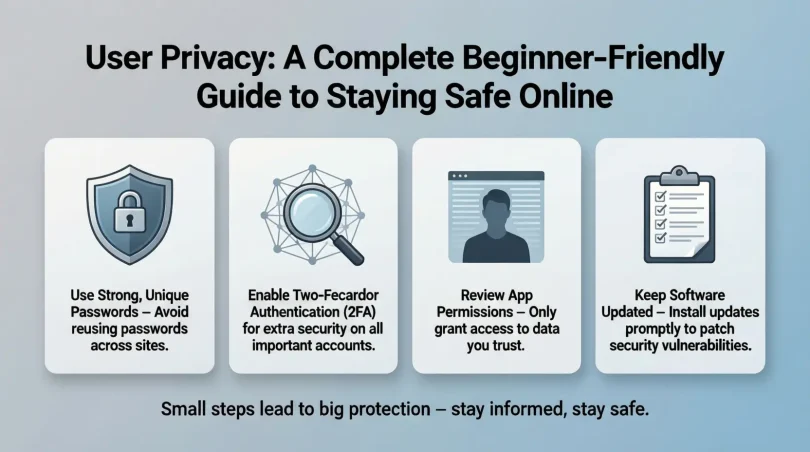
Many users ignore privacy settings and accept default options. This often leads to excessive data sharing. Another mistake is using weak passwords across multiple accounts. This increases the risk of breaches.
Some people trust every app or website without checking credibility. Others skip reading policies completely. Sharing personal details on public platforms is also risky. Avoiding updates and security patches is another common error that exposes data.
Being careless with public Wi-Fi and clicking unknown links can compromise privacy. Learning from these mistakes helps users stay safer online.
FAQs
What personal data needs protection?
Personal data includes names, emails, phone numbers, passwords, financial details, and location data. All of this should be protected carefully.
How can users control their data?
Users can manage privacy settings, review permissions, and choose platforms that respect transparency and consent.
Are free apps safe for privacy?
Some free apps rely on data collection. Always check permissions and policies before using them.
Can privacy be fully guaranteed?
No system is perfect, but strong practices greatly reduce risks and improve safety.
Why do companies collect data?
Data helps improve services, personalize content, and support business operations when used responsibly.
What should I do if my data is misused?
Report the issue, change passwords, and contact the platform’s support team immediately.
Expert Tips & Bonus Points
Always review app updates because privacy terms may change. Use different passwords for important accounts and consider password managers. Regularly clean unused apps and accounts. Teach basic privacy habits to family members, especially beginners. Staying informed and cautious is the best long-term strategy for digital safety.
Conclusion
User Privacy is a shared responsibility between users and organizations. In a world where digital interactions are part of daily life, protecting personal data is more important than ever. When users understand how their information is collected and used, they gain confidence and control. Simple steps like adjusting settings, limiting permissions, and staying informed can make a big difference.
For beginners and intermediate users, learning privacy basics creates safer online habits. It reduces risks, builds trust, and supports personal freedom. Businesses that respect privacy also benefit through loyalty and compliance. As technology continues to evolve, privacy awareness will remain a key skill for everyone.
By following the guidance shared in this article, users can enjoy digital services while staying protected. A balanced approach to privacy allows innovation and security to work together, creating a safer and more trustworthy online environment for all.